
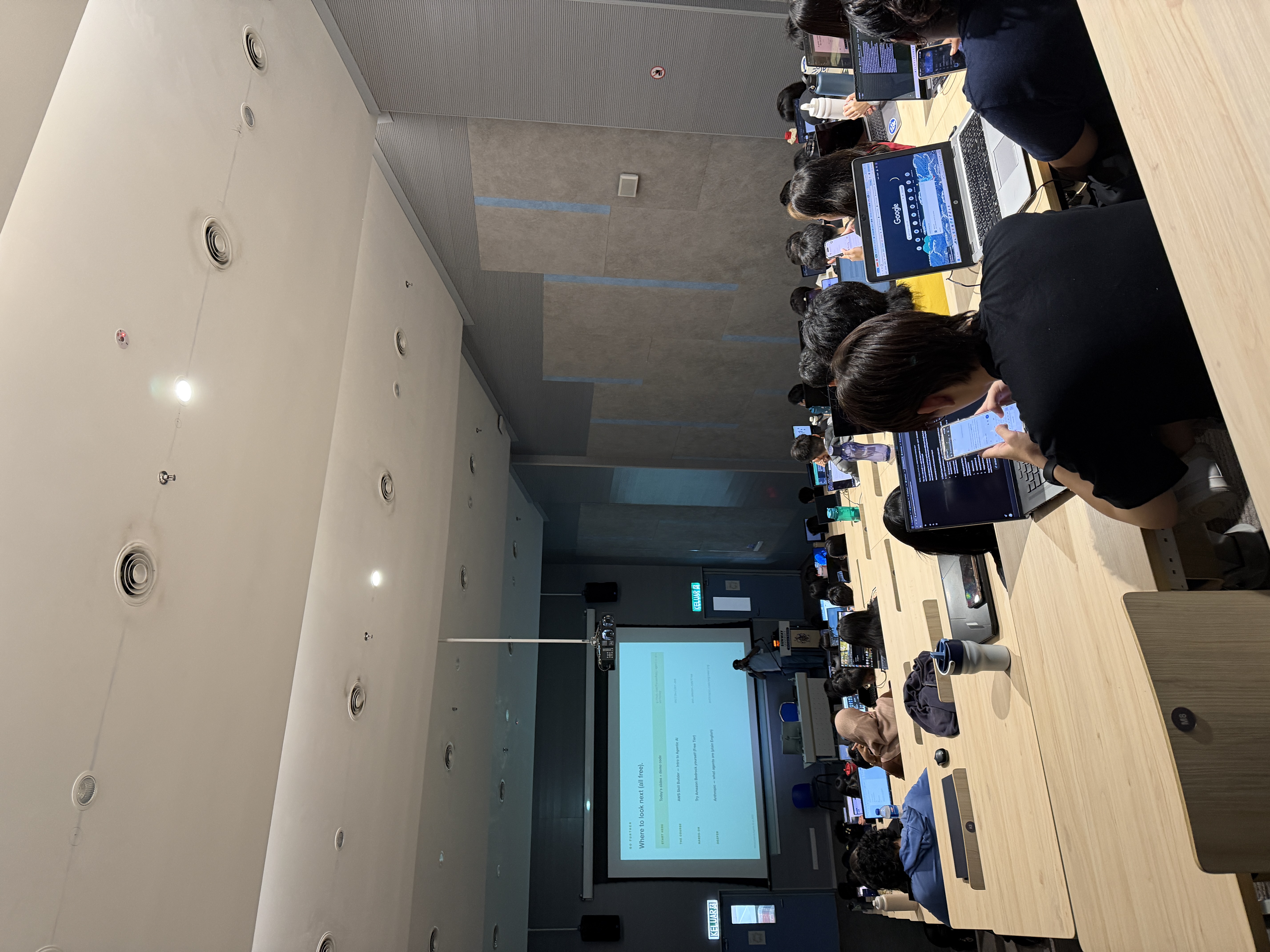
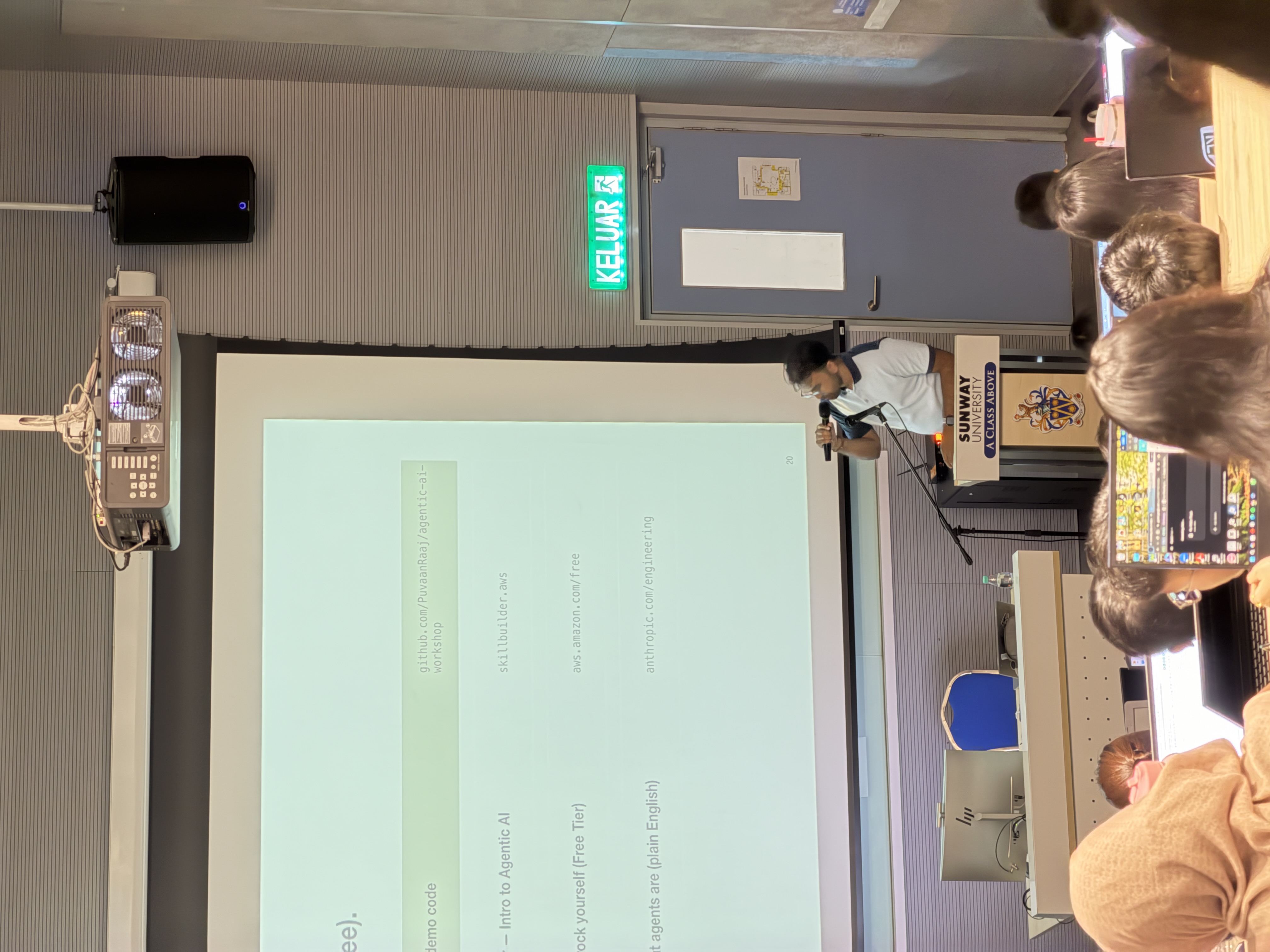
A two-hour, beginner-friendly workshop at Sunway University on agentic AI and how you actually build one on AWS. No prior AWS experience assumed. The room was mostly students, laptops open, so the whole thing was pitched at curiosity rather than credentials.
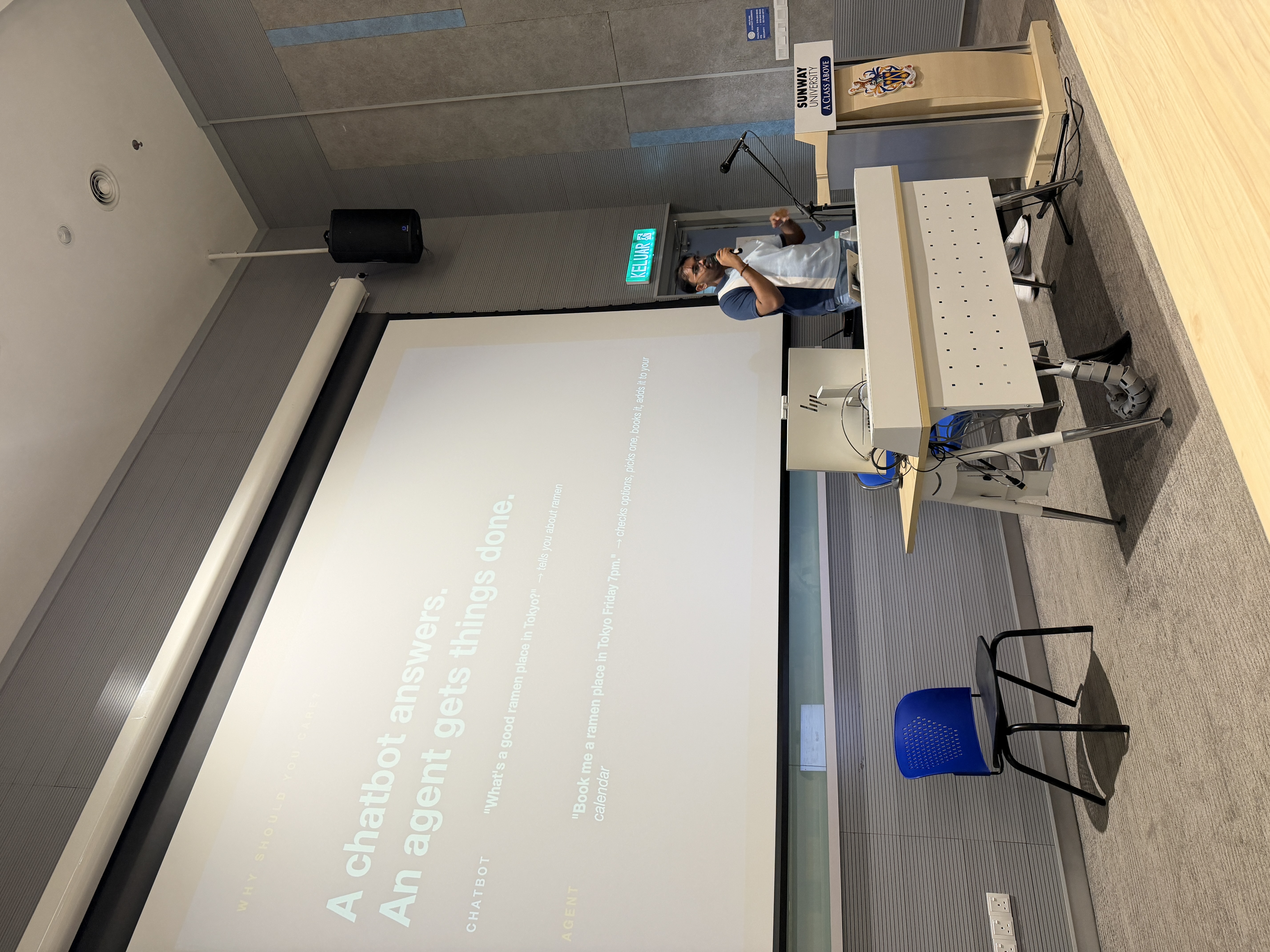
The pitch I kept coming back to: a chatbot answers, an agent gets things done. Ask a chatbot for a good ramen place in Tokyo and it tells you about ramen. Ask an agent to book you one for Friday 7pm and it checks the options, picks one, books it, and drops it in your calendar. That gap is the whole topic.
What I Covered
I started with the vocabulary, five words in plain English: model, token, API, tool, and agent. Then the big idea, which is that an agent is really just three things stacked together. A model that only talks. Add memory and you get a chatbot. Add tools and a loop and you get something that can actually act and try again when it fails.
The loop is the part I wanted people to walk away remembering: think, do, look, repeat. You already reason this way when you plan a weekend. “I need the weather,” check the app, “rain Saturday,” pick indoor plans, done. An agent is the same loop, just with code in the middle.
From there I walked through the four flavours of agent, from a fixed workflow at one end to a fully autonomous worker at the other, with the advice to always pick the least powerful one that does the job. We also spent real time on how agents fail, because they fail in very human ways: going in circles, guessing instead of asking, or doing far too much. Each one has a boring, practical fix, and AWS gives you most of those safety nets out of the box.
The AWS Part
The second half got concrete. I mapped the “what do I actually reach for” question onto Amazon Bedrock for the models, Bedrock Agents for a ready-made think-do-look loop, and AgentCore for the memory, limits, and guardrails. The rule of thumb I left them with: start at Bedrock, and only reach for more when the task asks for it.
I also gave Kiro a proper spotlight, because it inverts the usual “vibe coding” flow. Instead of writing code first and finding out later that it built the wrong thing, Kiro writes a spec you approve first, then writes code that matches the plan. For beginners that’s a big deal, because you agree on what you’re building before any code exists.
Live Demos
There were three live demos, and they were the spine of the session. First, just the model in the Bedrock console, asking it for the weather in Penang and watching it admit it can’t check. The brain is brilliant but blind. Then the code peek, where we hand it a tool and the same question suddenly gets a real answer. And finally a ticket-triage agent reading a real support ticket, deciding on its own to look up the customer, and drafting a reply grounded in their history. Nobody tells it to look the customer up. It reasons that it needs the info and reaches for the tool. Same loop from the first hour, doing real work.
What I Wanted People to Leave With
Five things. An agent is a model plus tools plus a loop. The loop is think, do, look, repeat. Tools give the AI hands. Agents fail in human ways, and all of it is fixable. And when you want to build one for real, start at Amazon Bedrock and grow from there.
I closed on a list of beginner project ideas worth trying this week. A study quiz buddy that reads your notes and quizzes you. A timetable helper. A reading summariser. Small enough to finish, real enough to learn from. The whole point of the workshop was that none of this is out of reach, and the best way to believe that is to go build something small.